Who is betting on what in AI, and against whom.
The six camps of AIWho is betting on what, and against whom.
104 labs, but only a handful of real disagreements. Each camp below is defined by its answer to four questions, not by its product category. Every dated role, funding round and camp assignment links to a source; every person and lab has a page showing where they came from and where they moved.
New to this? Read the six summaries first, then the four fault lines, then one camp's Go deeper panel. Following the money? See Capital for rounds, valuations and public tickers by camp.
The four fault lines
Pick a question to see how the six camps answer it.
- LLM scaling Text, then verifiable rewards and human preferenceOffline pretrain, then freeze; memory is a retrieval layerTokens over a transformerSoftware: chat, code, browsers, APIs
- World models Self-supervised prediction of video and latent stateOffline pretraining, but built to plan at inference by rolling out imagined futuresLatent embeddings (JEPA) or generated pixels (video models). These sub-camps disagree.Simulated and physical environments; robotics and driving downstream
- Physics AI Simulation data plus the governing equations themselves, which act as a checkable rewardOffline pretraining, then optimization loops at inference: simulate, take a gradient, redesignContinuous fields in 3D plus time; neural operators, resolution-invariantDesign and discovery loops: materials, fusion, weather, devices, drugs
- Experience / RL Scalar reward from interaction, plus self-generated subgoals (options)Continually, at runtime, forever. No train/deploy boundaryWhatever the agent builds online: learned features and options, no replay bufferAny environment, ultimately embodied. Target: 20 watts
- Physical AI Teleop demonstrations, human video, sim-to-real, then on-robot RLOffline, with on-robot RL fine-tuning starting to matterMostly camp 1: a vision-language model with a diffusion or flow action headActuators in the real world
- Other substrates Task success on novel abstraction (ARC), free-energy minimization, symbolic consistencyOften at test time: search and adapt per task rather than pretrain onceExplicit programs, symbols or probabilistic models; deep nets only as a guide for searchMostly abstract problems today; some robotics via active inference
Scale next-token prediction
Internet-scale text pretraining, then reinforcement learning on outcomes, then tools. Grounding, planning and memory are expected to emerge from scale.
Go deeper: what this camp actually believes
Take a transformer, train it to predict the next token on most of the written internet, then teach it manners with human feedback and reasoning with reinforcement learning on problems that have checkable answers. Give it tools. Repeat with more compute.
That recipe produced every product a layperson has used: ChatGPT, Claude, Gemini, Grok, DeepSeek, Kimi. The camp's claim is that the recipe keeps working. Grounding, planning and memory are expected to arrive as side effects of scale plus post-training, not as separate research programs.
The money reflects that confidence. Anthropic raised $65B at a $965B valuation in May 2026 and filed for an IPO on June 1; OpenAI filed a week later after a $122B round at $852B. Two Chinese labs, Zhipu and MiniMax, listed in Hong Kong in January. The open-weight labs in China keep the gap to the closed frontier under a year and have taken over 45% of OpenRouter token traffic.
The fight inside the camp is about where the next gains come from: bigger pretraining runs, or more reinforcement learning after pretraining. Every other camp in this atlas is a bet on where this recipe runs out.
People
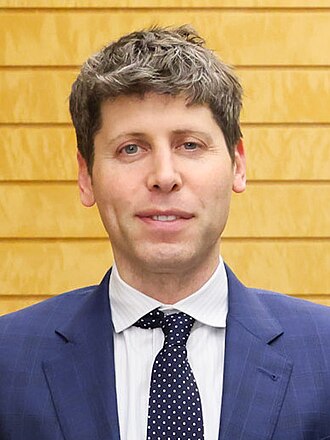
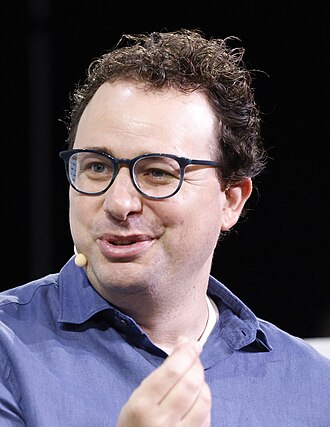
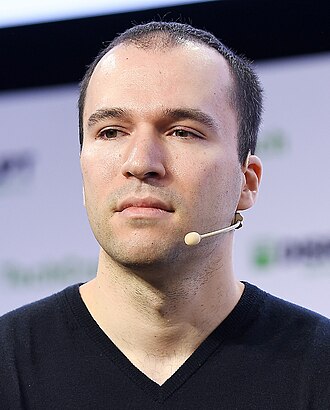
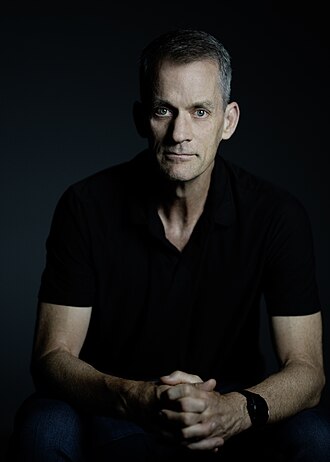


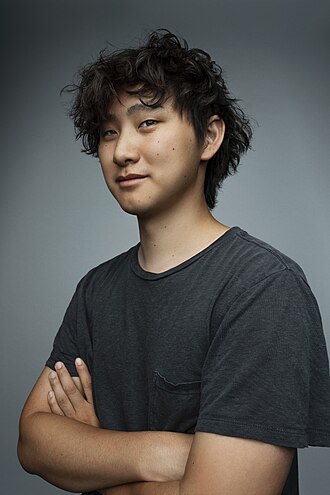
Labs and companies

NYSE:BABALargest open-weight family by downloads; passed Llama on Hugging Face in 2026.








NASDAQ:METAMeta Superintelligence Labs (TBD Lab under Wang) went all-in on frontier LLMs after LeCun left. Muse models are hosted, not open.
NASDAQ:MSFTSeven in-house MAI models at Build 2026; a superintelligence team separate from OpenAI.






NASDAQ:SPCXGrok. Compute-maximalist. Folded into SpaceX in 2026; publicly traded via SPCX.

Also active here: Hugging Face (LeRobot), Inception, NVIDIA, Prime Intellect.
Signature ideas
Each idea is explained on the camp page.
Where it stands
Dominant on revenue, compute and talent. Two IPO filings in June 2026 will put audited numbers behind the valuations. Open-weight Chinese labs keep the gap to the closed frontier under a year and reached over 45% of OpenRouter tokens in 2026. Talent is consolidating: Karpathy and Jumper joined Anthropic in May and June 2026. The internal split that matters is pretraining-scale believers versus post-training-scale believers.
What would prove them right. Commercially proven already. The live question is whether it saturates on physical grounding, sample efficiency and post-deployment learning, which is exactly what every other camp bets on.
Live disagreements. Do gains now come from pretraining scale or from post-training? Open weights or closed? Is the recipe saturating? Both sides, cited.
World models
Predict the world, not text. Learn the dynamics of the environment from video and sensors so an agent can imagine outcomes and plan.
Go deeper: what this camp actually believes
A language model predicts the next word. A world model predicts the next moment: what the scene will look like, where the objects will be, what happens if you push. Train that on video and sensor streams and you get something an agent can plan inside, by imagining outcomes before acting.
Two sub-camps disagree about what to predict. LeCun's JEPA line predicts abstract latent features and argues that generating pixels wastes capacity on irrelevant detail. The video camp (Genie, Cosmos, Luma, Runway, Decart) generates frames directly and points out that its models exist, ship, and produce training data for robots.
The money arrived before the results. AMI Labs raised a $1.03B seed with no product; World Labs raised $1B; Wayve, Waabi, Luma, Runway, Decart, Odyssey and General Intuition each raised hundreds of millions. Genie 3 can generate a playable world in real time, but no latent world model has yet planned a multi-step physical task from raw video better than a vision-language-action model does.
People

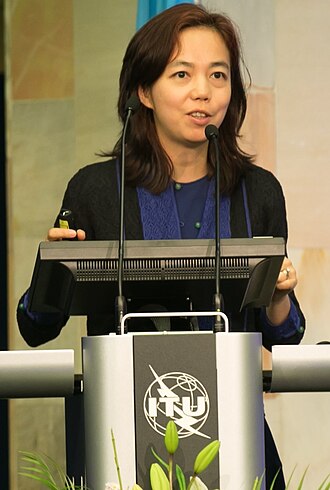
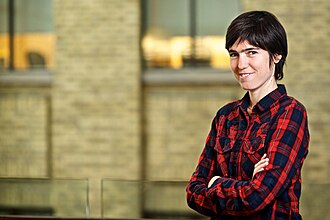
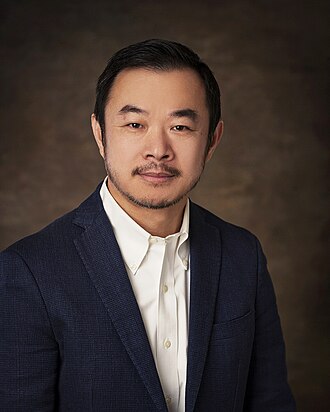
Labs and companies



NASDAQ:GOOGLGenie 3 (August 2025) generates playable worlds in real time; Project Genie opened it to subscribers in January 2026.


NASDAQ:NVDACosmos world foundation models as a data engine for robots; Cosmos 3 announced at GTC 2026.





Also active here: Genesis AI, Meta, OpenAI, Waymo.
Signature ideas
Each idea is explained on the camp page.
Where it stands
The money arrived before the results. Generative video world models (Genie 3, Cosmos 3) exist and are useful as simulators and data engines. JEPA-style latent models have no headline demonstration yet; AMI Labs has $1.03B and no product. LeCun argues pixel reconstruction wastes capacity; the video camp keeps shipping. World-model startups raised more than $6B in the first half of 2026.
What would prove them right. A latent world model that plans a multi-step physical task from raw video with far less data than a vision-language-action model, or one that beats LLM plus tools on long-horizon planning.
Live disagreements. Predict pixels or predict latents? Is a world model a research program or a video feature? Both sides, cited.
Physics AI and AI for science
Ideas are cheap now; experiments are the bottleneck. Replace the lab with a universal learned simulator that also tells you which direction to improve.
Go deeper: what this camp actually believes
This camp says the bottleneck in science is no longer ideas but experiments. It wants a learned simulator good enough to replace most of the lab bench, and a loop around it that says which direction to improve a design. The signal is different from text: simulation data, plus the governing equations themselves, which act as a reward you can check. The representation is continuous fields in space and time, handled by neural operators that work at any resolution. The existence proof for learned simulators is weather: learned models have beaten physics-based forecasts since 2023. The design loop has no equivalent result yet. The camp has two strands, and the labs below are sorted by them. Simulator-first labs bet on scale in the model: a learned simulator good enough to design inside. Lab-in-the-loop companies bet on the loop itself: a model proposes, an automated lab tests, the result trains the next model. Bezos's Prometheus, at $41B, is the largest bet on the first strand; drug design is the most mature part of the second.
People
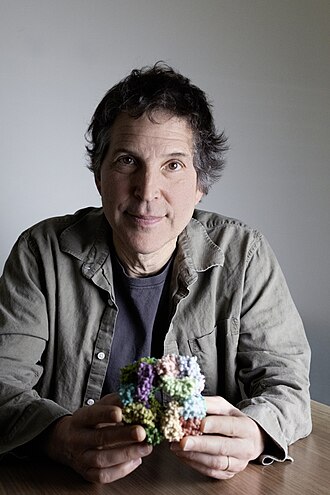 David BakerUniversity of Washington, Professor of biochemistry; director, Institute for Protein Design

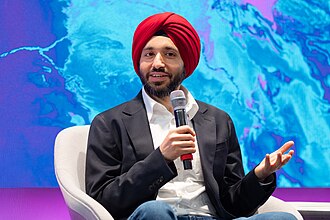
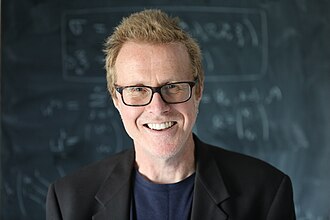
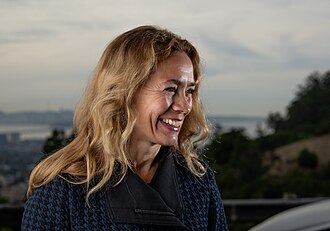 Kristin PerssonUC Berkeley and Lawrence Berkeley National Laboratory, Professor; director, Materials Project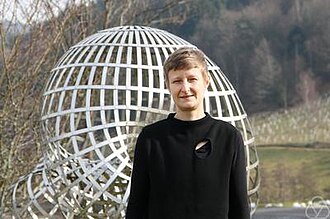
Labs and companies






NASDAQ:GOOGLGraphCast and AlphaFold; AlphaEvolve for algorithm discovery. The AlphaFold team dispersed in 2026, with Jumper leaving for Anthropic.









NASDAQ:RXRXBoltz-2 open binding-affinity model; a listed company whose whole business is this.
NASDAQ:SDGRPhysics-based simulation for drug and materials discovery; the listed incumbent the learned-simulator labs are trying to displaceSignature ideas
Each idea is explained on the camp page.
Where it stands
Weather forecasting is already won by learned models. Materials, fusion and device design are early. Money moved fast in 2026: Prometheus raised $12B, PhysicsX and CuspAI raised $300M and $450M, and Accelerated Understanding came out of stealth in August with the most aggressive scale claim. Periodic and Lila bet on closing the loop with real robots in real labs.
What would prove them right. A device, material or molecule designed in the loop by the model that beats human plus classical simulation on a real-world benchmark, not just screened from a candidate list.
Live disagreements. Scale the simulator, or close the loop with a real lab? Is Prometheus in this camp? Both sides, cited.
Learn from experience
Intelligence is online reinforcement learning from a reward stream. Static datasets and the train-then-deploy split are a detour, and current deep learning cannot learn continually.
Go deeper: what this camp actually believes
The other camps train once, then freeze. This one says that is the mistake. Intelligence is an agent learning continually from a stream of experience and reward, building its own features and sub-goals as it goes, with no line between training and deployment.
Sutton's Bitter Lesson and the Alberta Plan are the founding documents; the 2025 essay 'Welcome to the Era of Experience' by Silver and Sutton is the manifesto. The engineering problem is that current deep networks lose plasticity and forget: a network trained on one thing for long enough stops being able to learn the next thing.
Until 2026 the camp was deliberately tiny. Then David Silver left DeepMind, raised $1.1B for Ineffable Intelligence, and Sutton left Keen to found Oak Lab with a target of a trillion-parameter agent learning in real time on 20 watts. Prime Intellect sells the tooling; Adaption Labs sells models that learn on the fly. Public results are still at toy scale.
People

Labs and companies


NASDAQ:GOOGLAlphaZero lineage and the 'Era of Experience' essay. RL head David Silver left in January 2026 to found Ineffable Intelligence.


Also active here: Lila Sciences, Physical Intelligence, Sakana AI.
Signature ideas
Each idea is explained on the camp page.
Where it stands
Two new labs, Ineffable and Oak, joined the camp in 2026. Silver left DeepMind in January and raised $1.1B by April; Sutton and Javed left Keen in July to found Oak Lab in Toronto. Public results are toy-scale so far. The plasticity and catastrophic-forgetting problems are named but not solved.
What would prove them right. An agent that keeps improving after deployment in a non-stationary environment without forgetting, at a scale where frozen transformers plateau.
Live disagreements. Can today's deep learning learn continually, or does it need new primitives? Is the LLM camp already doing this? Both sides, cited.
Physical AI and robotics
The architecture is roughly settled; data is the bottleneck. Scale vision-language-action models on teleoperation, human video and simulation until robots generalize.
Go deeper: what this camp actually believes
The robotics camp mostly agrees with the LLM camp about architecture: a vision-language model with an action head, trained on teleoperated demonstrations, human video and simulation, then fine-tuned on the robot. What it needs is data, and the whole field is organized around getting it: fleets, teleoperation farms, simulators, and cheap hardware. The proof case is a robot doing a task in a home it has never seen. Physical Intelligence's pi0.5 showed generalization of that kind in 2025; Figure reports robots on a BMW line; Agility's Digit has the most warehouse hours. Humanoid demos are still teleop-heavy, and Tesla admitted in January 2026 that no Optimus was doing useful work. Money follows the platform thesis. Skild and Physical Intelligence are priced like AI infrastructure, not robot makers. China dominates installations, and Unitree's August 2026 listing in Shanghai gave the camp its first large public pure play. Levine's wing is philosophically closer to the experience camp: robots should learn from their own deployment.
People

Labs and companies












NASDAQ:GOOGLGemini Robotics 2 (July 2026) controls whole humanoid bodies; its models go into the next Boston Dynamics Atlas.

NASDAQ:NVDAGR00T N1 (March 2025) was the first open humanoid foundation model; N2 previewed at GTC 2026.


NASDAQ:TSLAOptimus: vertically integrated humanoid. Production slipped to summer 2026; 2025 targets missed.



Also active here: Amazon AGI Lab, OpenAI.
Signature ideas
Each idea is explained on the camp page.
Where it stands
Less a scientific bet than an application layer: it imports architectures from camp 1 and simulators from camp 2. Real deployments exist in warehouses and laundries; humanoid demos are still teleop-heavy and Tesla missed its 2025 Optimus target entirely. Valuations moved faster than deployments: Skild tripled to $14B in seven months, Unitree closed its first trading day up 460%. Levine's wing is philosophically closer to the experience camp.
What would prove them right. A general-purpose robot doing unseen household tasks at useful reliability without per-site data collection.
Live disagreements. Humanoid or task-specific? One brain for every body, or vertical integration? Is this a camp at all? Both sides, cited.
Program search and other substrates
Gradient descent over one giant network is the wrong primitive. Intelligence is efficient skill acquisition on novel problems, which needs search, symbols, probabilistic models, or a different kind of computer.
Go deeper: what this camp actually believes
Every other camp trains one giant network by gradient descent. This one says that is the wrong primitive. Intelligence is efficient skill acquisition on problems you have not seen, and that needs search over programs, explicit symbols, probabilistic models, a different computer, or a different kind of network.
ARC-AGI is the camp's scoreboard. It is built to resist memorization, and it gets harder faster than models solve it: the best verified ARC-AGI-2 result in 2025 was 54%, achieved by wrapping a frontier model in a search loop, at $30 a task. ARC-AGI-3, launched in 2026, is interactive; the first milestone winner scored about 1%.
The camp's best ideas keep leaking into camp 1 as test-time compute and tool use, which both validates and neutralizes it. Its hardware wing (Extropic, Normal, Cortical Labs) is the only part with no overlap: thermodynamic chips and living neurons are not something a transformer can absorb.
People

Labs and companies


ASX:BRNAkida neuromorphic processors; the only listed company whose business is brain-inspired chips.












Signature ideas
Each idea is explained on the camp page.
Where it stands
ARC-AGI gets harder faster than models solve it: 54% on ARC-AGI-2 by a search wrapper over Gemini 3, about 1% on the new interactive ARC-AGI-3. Funded but small; Basis and the Thousand Brains Project are nonprofits. The camp's best ideas keep leaking into camp 1 as test-time compute and tool use, which both validates and neutralizes it.
What would prove them right. Beating ARC-AGI at human sample efficiency, or learning a new domain from a handful of examples without a giant prior.
Live disagreements. Does ARC measure intelligence or just a gap in training data? Search over programs, or a different substrate? Both sides, cited.
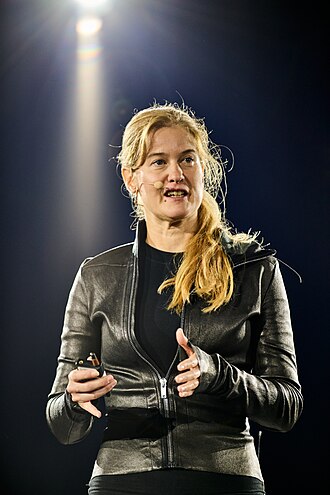
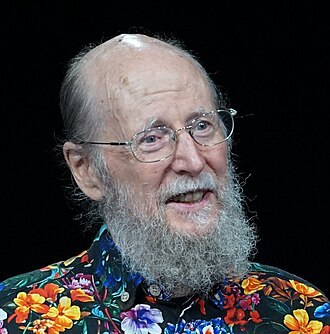
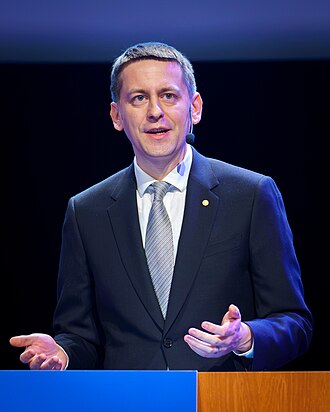
Who moved this year
The most useful signal in the dataset. Every move is dated and sourced on the person's page; the Changes page has all of them.

The ones in several camps at once
These organizations have picked more than one camp, usually the large companies and the suppliers that sell to every camp. Dots show which camps they are in today; the ringed dot is the primary one.
The layers on top of the camps
The largest research community in the field that is not a camp. Safety and interpretability, evaluations, agents and inference hardware each sit inside camp 1 without disagreeing with it about how intelligence works. Together they hold much of the research community and most of the second-order money, which is why they get the same weight here as a camp.
Safety and interpretability
inside LLM scalingThe largest research community that is not a camp, and almost entirely a program inside camp 1: it studies the models the scaling labs build.
Evaluations and forecasting
inside LLM scaling and Physical AIWhoever measures the field shapes it.
Why it is a layer, with sourcesAgents and scaffolding
inside LLM scalingTool use, memory, long-horizon planning and the harnesses that turn a model into a worker.
Why it is a layer, with sourcesInference hardware and serving
inside LLM scalingThe suppliers to camp 1 apart from Nvidia: chips built for serving rather than training, and the clouds that rent them.
Why it is a layer, with sourcesOutside the camps
Not neutral, and not undecided. These are some of the most cited people in the field, and each argues for something that cuts across all six camps or rejects the framing outright. They carry no camp here because a camp would misdescribe them. What each one argues for is summarized here and sourced on their page.
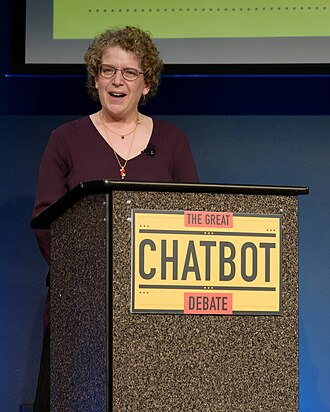
Language models model text, not understanding, and the field's claims outrun its evidence.
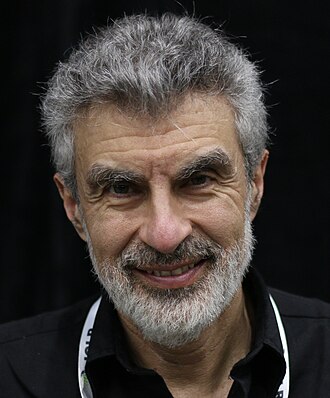
Build 'Scientist AI' that explains and predicts but does not act, as a check on every camp that is building agents.
What gets called AI is a collective, economic system of prediction and markets; the race to build one artificial mind is the wrong frame.
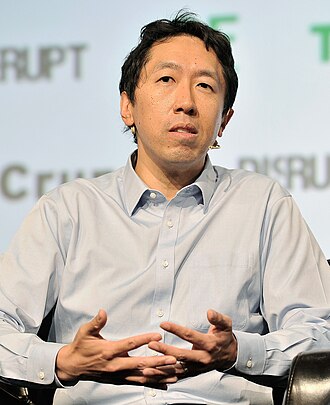
Pick the tool per problem. The bets that matter are applications and education, not one theory of intelligence.
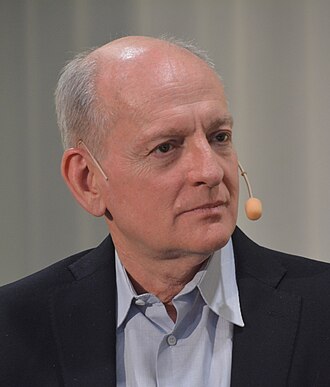
Build systems that stay uncertain about human objectives; a design constraint that cuts across every camp.
Follow the money
Primary raises since January 2022, by camp, from the rounds this atlas records. Listings, mergers and reported talks are left out. The Capital page has every round with its source, filters by period and size, the private valuation table and the public tickers.