Who is betting on what in AI, and against whom.
Scale next-token prediction
Internet-scale text pretraining, then reinforcement learning on outcomes, then tools. Grounding, planning and memory are expected to emerge from scale.
In plain words
Take a transformer, train it to predict the next token on most of the written internet, then teach it manners with human feedback and reasoning with reinforcement learning on problems that have checkable answers. Give it tools. Repeat with more compute.
That recipe produced every product a layperson has used: ChatGPT, Claude, Gemini, Grok, DeepSeek, Kimi. The camp's claim is that the recipe keeps working. Grounding, planning and memory are expected to arrive as side effects of scale plus post-training, not as separate research programs.
The money reflects that confidence. Anthropic raised $65B at a $965B valuation in May 2026 and filed for an IPO on June 1; OpenAI filed a week later after a $122B round at $852B. Two Chinese labs, Zhipu and MiniMax, listed in Hong Kong in January. The open-weight labs in China keep the gap to the closed frontier under a year and have taken over 45% of OpenRouter token traffic.
The fight inside the camp is about where the next gains come from: bigger pretraining runs, or more reinforcement learning after pretraining. Every other camp in this atlas is a bet on where this recipe runs out.
Unfamiliar terms are in the glossary.
Where it stands
Dominant on revenue, compute and talent. Two IPO filings in June 2026 will put audited numbers behind the valuations. Open-weight Chinese labs keep the gap to the closed frontier under a year and reached over 45% of OpenRouter tokens in 2026. Talent is consolidating: Karpathy and Jumper joined Anthropic in May and June 2026. The internal split that matters is pretraining-scale believers versus post-training-scale believers.
What would prove them right. Commercially proven already. The live question is whether it saturates on physical grounding, sample efficiency and post-deployment learning, which is exactly what every other camp bets on.
The disagreements, both sides cited
Do gains now come from pretraining scale or from post-training?
Open weights or closed?
Is the recipe saturating?
What to watch
- The public S-1s: revenue, gross margin and compute commitments for OpenAI and Anthropic will be the first audited numbers for the camp. Anthropic files to go public TechCrunch 2026-06-01 · OpenAI files confidentially for IPO, following Anthropic TechCrunch 2026-06-08
- Open-weight share of API traffic: Chinese providers went from under 2% to over 45% of OpenRouter tokens in a year.
- Whether the next generation of models improves on reasoning benchmarks that resist memorization, such as ARC-AGI-2 and 3, without a search wrapper. ARC Prize 2025 results and analysis 2025-12-05
People (46)
Researchers 32
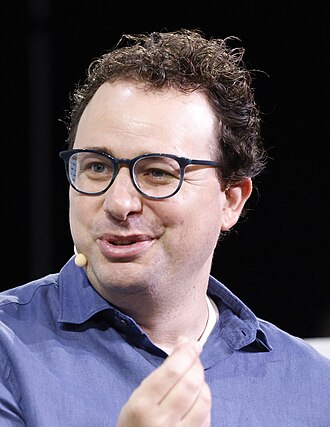
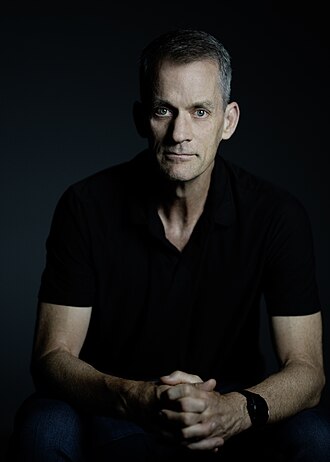
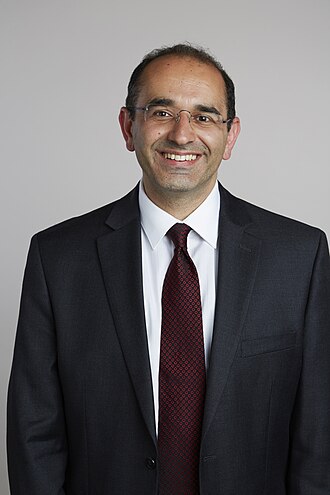
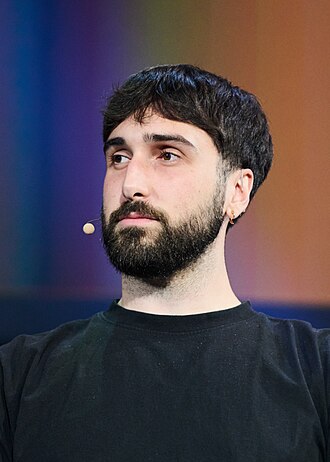
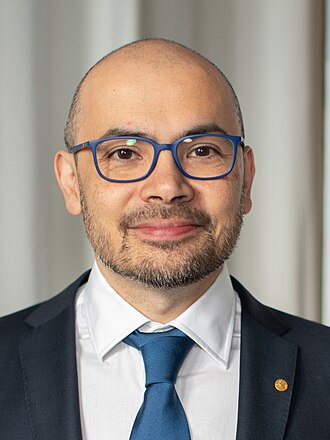
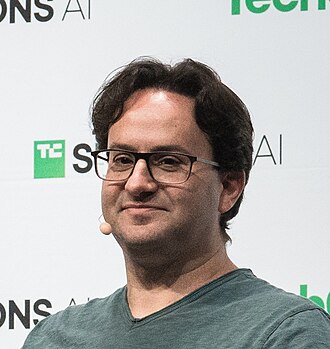
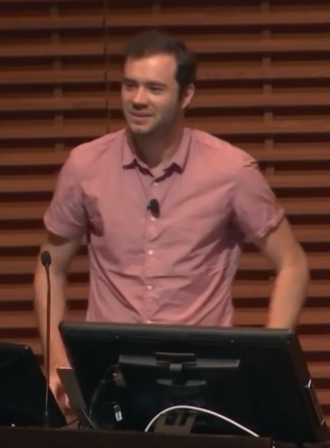
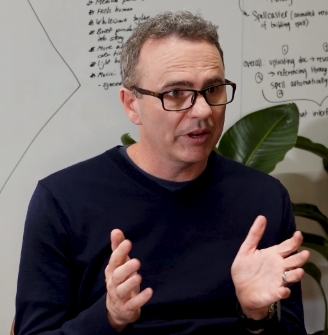
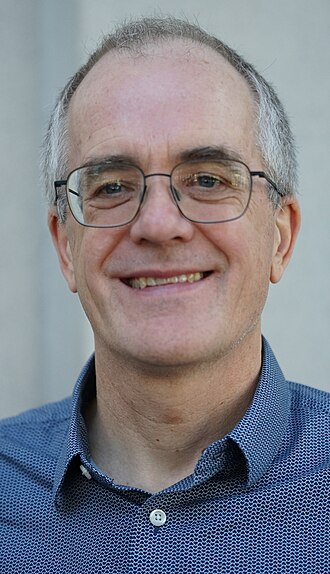
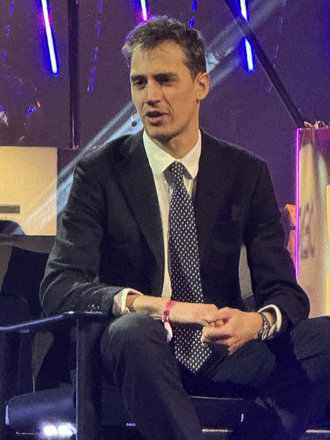

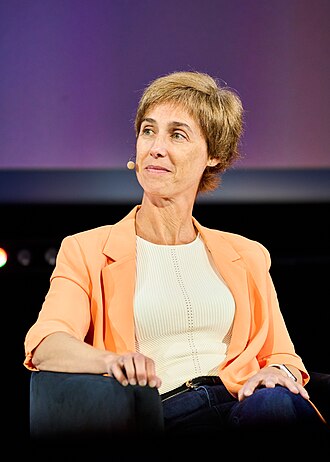
Founders 13
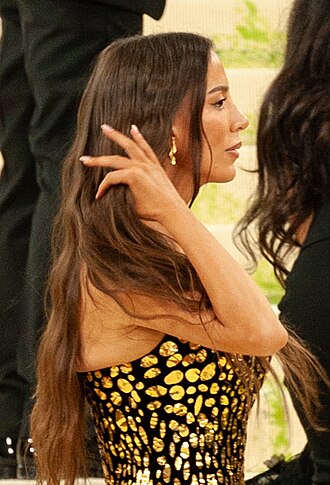
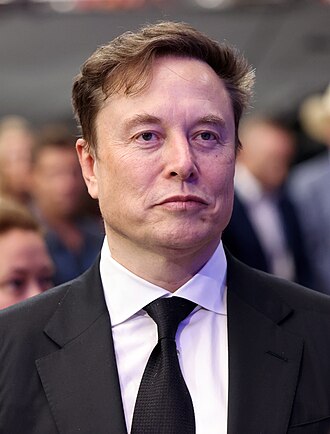
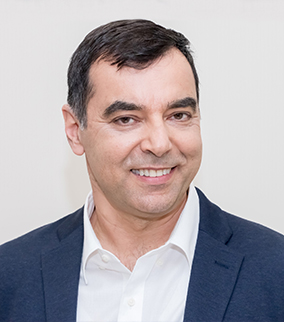

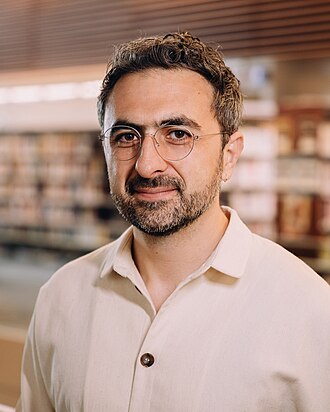
Investors 1
Researchers have held a research or faculty role; scientist-founders count. Founders, executives and investors are listed separately so nobody mistakes a boardroom for a lab. Where someone argues for a different camp than the one they work in, it says so.
Where it is studied
Universities and institutes with people in this camp, from the roles recorded here. Not a ranking, and not complete: a place is listed when someone in the atlas works there.
- Stanford University Yejin Choi, Percy Liang, Christopher Manning, Christopher Ré
- University of Washington Hannaneh Hajishirzi, Natasha Jaques, Pang Wei Koh
- Harvard University Sham Kakade, Cengiz Pehlevan
- UC Berkeley Sewon Min, Dawn Song
- Carnegie Mellon University Aditi Raghunathan
- EPFL Martin Jaggi
- Johns Hopkins University Jared Kaplan
- MIT Jeff Gore
- Mila Irina Rish
- New York University Andrew Gordon Wilson
- Tsinghua University Tang Jie
- UC San Diego Daniel Y. Fu
- Université de Montréal Irina Rish
Also publishing here (25)
Senior authors in this camp's core literature, found through the alphaXiv research index or an institutional profile, and listed on the strength of one paper each. Being on this list means they publish in the field, not that they have taken a side. The full list is on the People page.
- Pierre Ablin Apple paper
- Rishabh Agarwal Periodic Labs paper
- Dan Alistarh ISTA and Neural Magic paper
- Bryan Catanzaro NVIDIA paper
- Yu Cheng Shanghai AI Laboratory paper
- Yejin Choi Stanford University paper
- Daniel Y. Fu UC San Diego and Together AI paper
- Jeff Gore MIT paper
- David Grangier Apple paper
- Hannaneh Hajishirzi University of Washington paper
- Joel Hestness Cerebras paper
- Martin Jaggi EPFL paper
- Natasha Jaques University of Washington paper
- Daxin Jiang StepFun paper
- Jan Kautz NVIDIA paper
- Pang Wei Koh University of Washington paper
- Acyr Locatelli Cohere paper
- Sewon Min UC Berkeley paper
- Cengiz Pehlevan Harvard University paper
- Aditi Raghunathan Carnegie Mellon University paper
- Irina Rish Université de Montréal and Mila paper
- Dawn Song UC Berkeley paper
- Furu Wei Microsoft Research Asia paper
- Andrew Gordon Wilson New York University paper
- Luke Zettlemoyer Meta paper
Labs and companies (23)

NYSE:BABALargest open-weight family by downloads; passed Llama on Hugging Face in 2026.








NASDAQ:METAMeta Superintelligence Labs (TBD Lab under Wang) went all-in on frontier LLMs after LeCun left. Muse models are hosted, not open.
NASDAQ:MSFTSeven in-house MAI models at Build 2026; a superintelligence team separate from OpenAI.






NASDAQ:SPCXGrok. Compute-maximalist. Folded into SpaceX in 2026; publicly traded via SPCX.

Also active here: Hugging Face (LeRobot) (The hub where open-weight models are published and downloaded); Inception (Trained on the same text corpora and sold against camp 1 models); NVIDIA (GPUs for everyone; Nemotron open models.); Prime Intellect (Trains open models (INTELLECT series) on distributed compute.).
Signature ideas
Scaling laws
Loss falls predictably as you add parameters, data and compute, following a power law. Kaplan and colleagues measured it in 2020; it is the reason labs can budget a training run before running it.
RLHF
Reinforcement learning from human feedback. Train a reward model on human preferences between answers, then optimize the language model against it. It turned GPT-3 into a usable assistant.
RL with verifiable rewards
Skip the human raters where an answer can be checked mechanically (math, code, unit tests) and reward the model directly. DeepSeek-R1 showed long chains of reasoning emerging from this alone.
Test-time compute
Spend more compute at answer time, by thinking longer or sampling many candidates, instead of only at training time. The o-series made it a product knob.
Mixture of experts
Route each token through a few of many sub-networks so a trillion-parameter model costs a fraction of that to run. Now standard in most frontier and open-weight models.
Long context
Windows of a million tokens or more let a model read a codebase or a book in one pass, reducing the need for retrieval.
Agents and tool use
Let the model call code, browsers and APIs in a loop. Most of the 2026 product surface, and the reason the camp claims planning without a planner.
Open weights vs closed
Whether to publish model weights. China's labs mostly do; the American frontier mostly does not.
Read in this order
- Attention Is All You Need 2017
The architecture everything since is built on.
- Scaling Laws for Neural Language Models 2020
The bet, stated as power laws: loss falls predictably with parameters, data and compute.
- Language Models are Few-Shot Learners 2020
GPT-3. Scale produced in-context learning nobody trained for.
- Training Compute-Optimal Large Language Models 2022
Chinchilla. Most models had been undertrained on data; the recipe changed overnight.
- The Bitter Lesson 2019
Sutton's essay, which the scaling camp quotes as its own founding text.
- DeepSeek-R1 2025
Reasoning trained with verifiable rewards on top of a pretrained base; the second scaling axis.
Layers that sit on top
Research programs that live inside this camp without disagreeing with it about how intelligence works.
Safety and interpretability 7 organizations
The largest research community that is not a camp, and almost entirely a program inside camp 1: it studies the models the scaling labs build. Mechanistic interpretability reverse-engineers circuits and features; alignment and control research asks how to keep a capable model doing what it was asked. A PhD applicant looking for this will not find it on the fault lines, because it does not disagree with camp 1 about how intelligence works, only about what to do with it.
- Anthropic interpretability team Circuits, features, 'mapping the mind' of Claude
- Goodfire Interpretability as a product
- Transluce Nonprofit; open tools for understanding model behavior
- Redwood Research AI control: safety that holds even if the model is scheming
- UK AI Security Institute State evaluator of frontier models
- Center for Human-Compatible AI Russell's Berkeley center; assistance games
- EleutherAI Open models and interpretability research
Evaluations and forecasting 7 organizations
Whoever measures the field shapes it. Benchmarks, arenas and forecasting shops decide which claims count, and their numbers are what the money watches. They sit across camps 1 and 5 because that is where the products are.
- METR Task-horizon measurements of autonomous agents
- Epoch AI Compute, data and capability trends
- LMArena Crowd-sourced pairwise model rankings
- Artificial Analysis Independent speed, price and quality benchmarks
- ARC Prize The one benchmark built to resist scaling
- SWE-bench Real GitHub issues as the coding-agent yardstick
- Apollo Research Evaluations for deception and scheming
Agents and scaffolding 4 organizations
Tool use, memory, long-horizon planning and the harnesses that turn a model into a worker. Nearly all of it is engineering on top of camp 1 models rather than a new theory of intelligence, which is why the atlas does not list it as a camp. Camp 4 argues that real agency needs learning from the stream itself; this layer bets it can be scaffolded instead.
- Anthropic (Claude Code, computer use) Agentic coding and computer use
- OpenAI (Operator, Codex) Browser and coding agents
- Reflection AI Autonomous coding agents from AlphaGo alumni
- Periodic Labs Agents that run experiments
Inference hardware and serving 6 organizations
The suppliers to camp 1 apart from Nvidia: chips built for serving rather than training, and the clouds that rent them. Their bet is that the models are settled enough to build silicon around, which is itself a position in the scaling debate.
- Groq LPU inference chips
- Cerebras Wafer-scale chips; IPO filed
- SambaNova Dataflow chips for inference
- Etched Transformer-only ASIC; the purest bet that the architecture is final
- Together AI Open-model serving cloud
- Fireworks AI Inference platform
How money reaches this camp
| Lab | Access | Note |
|---|---|---|
| Google DeepMind | NASDAQ:GOOGL | Alphabet (GOOGL). Gemini plus every other camp. |
| Meta | NASDAQ:META | Meta (META). Frontier models, hosted since 2026. |
| Microsoft AI | NASDAQ:MSFT | Microsoft (MSFT). In-house MAI models plus the OpenAI stake. |
| xAI (SpaceX AI division) | NASDAQ:SPCX | SpaceX (SPCX) since June 2026; Grok is its AI division. |
| Z.ai (Zhipu) | HKEX:2513 | Z.ai (HKEX 2513), the first listed LLM company. |
| MiniMax | HKEX:2610 | MiniMax (HKEX 2610). |
| Alibaba (Qwen) | NYSE:BABA | Alibaba (BABA). Qwen is a cloud demand generator. |
| Baidu (ERNIE) | NASDAQ:BIDU | Baidu (BIDU). ERNIE. |
| NVIDIA | indirect | Nvidia (NVDA) sells the compute every lab in the camp trains on. |
| Anthropic | private | S-1 filed June 2026; listing expected late 2026. |
| OpenAI | private | S-1 filed June 2026; timing undecided. |
| DeepSeek | private | First outside round June 2026; IPO preparations reported. |
| Moonshot AI | private | Hong Kong IPO possible by end of 2026. |
Not investment advice. Private valuations are what the last round implied; "reported" means the press, not the company, gave the figure. Full table on the Capital page.