Who is betting on what in AI, and against whom.
Program search and other substrates
Gradient descent over one giant network is the wrong primitive. Intelligence is efficient skill acquisition on novel problems, which needs search, symbols, probabilistic models, or a different kind of computer.
In plain words
Every other camp trains one giant network by gradient descent. This one says that is the wrong primitive. Intelligence is efficient skill acquisition on problems you have not seen, and that needs search over programs, explicit symbols, probabilistic models, a different computer, or a different kind of network.
ARC-AGI is the camp's scoreboard. It is built to resist memorization, and it gets harder faster than models solve it: the best verified ARC-AGI-2 result in 2025 was 54%, achieved by wrapping a frontier model in a search loop, at $30 a task. ARC-AGI-3, launched in 2026, is interactive; the first milestone winner scored about 1%.
The camp's best ideas keep leaking into camp 1 as test-time compute and tool use, which both validates and neutralizes it. Its hardware wing (Extropic, Normal, Cortical Labs) is the only part with no overlap: thermodynamic chips and living neurons are not something a transformer can absorb.
Unfamiliar terms are in the glossary.
Where it stands
ARC-AGI gets harder faster than models solve it: 54% on ARC-AGI-2 by a search wrapper over Gemini 3, about 1% on the new interactive ARC-AGI-3. Funded but small; Basis and the Thousand Brains Project are nonprofits. The camp's best ideas keep leaking into camp 1 as test-time compute and tool use, which both validates and neutralizes it.
What would prove them right. Beating ARC-AGI at human sample efficiency, or learning a new domain from a handful of examples without a giant prior.
The disagreements, both sides cited
Does ARC measure intelligence or just a gap in training data?
Search over programs, or a different substrate?
What to watch
- Beating ARC-AGI at human sample efficiency, or learning a new domain from a handful of examples without a giant prior. ARC Prize 2025 results and analysis 2025-12-05
- ARC-AGI-3 scores through 2026: the interactive benchmark started near 1%. ARC Prize 2026: ARC-AGI-3 Milestone Prize #1 2026-07-06
- Whether Extropic's Z1 chip ships at scale under the CHIPS letter of intent, and whether any thermodynamic chip runs a real model.
People (45)
Researchers 35
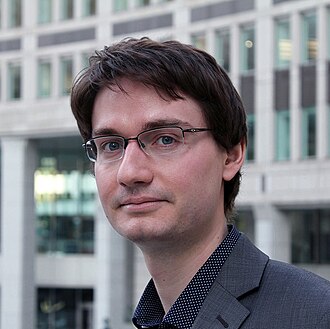
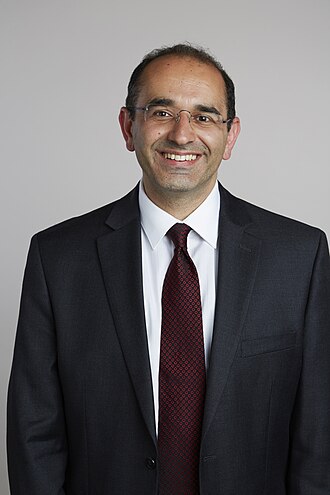
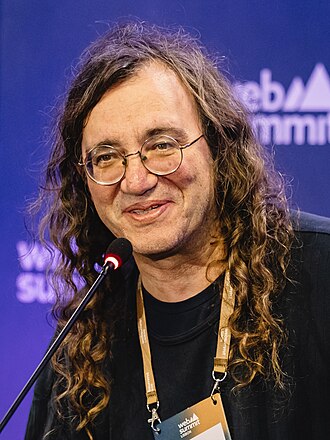
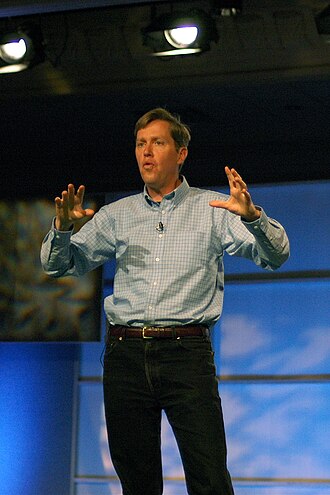
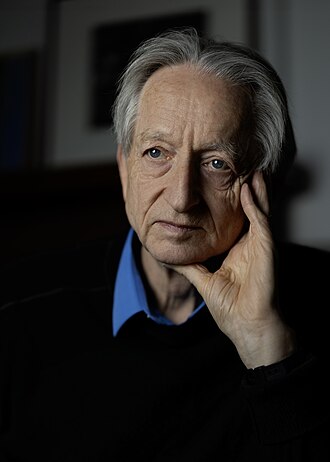

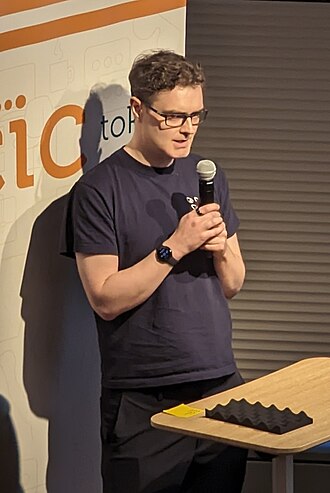
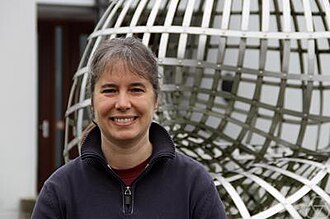
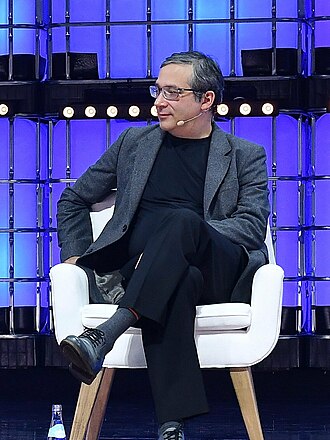
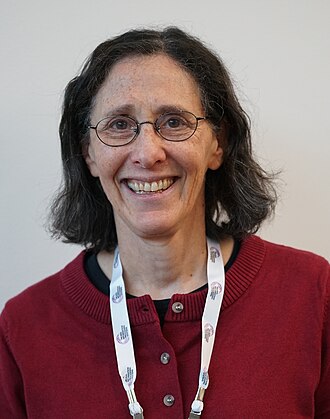
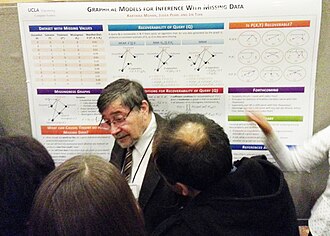
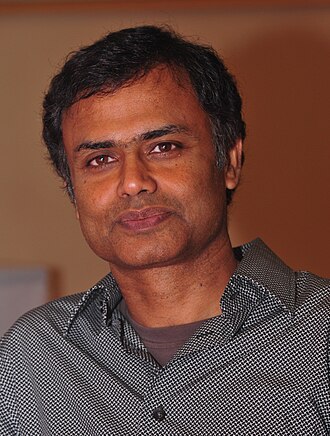
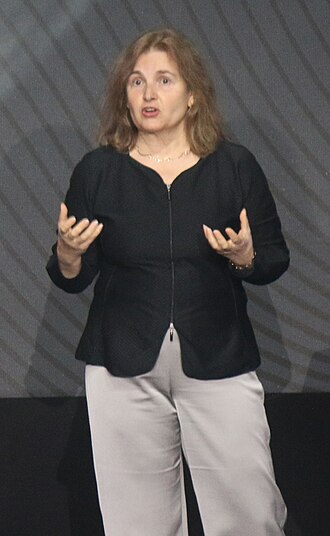
Founders 9
Executives 1
Researchers have held a research or faculty role; scientist-founders count. Founders, executives and investors are listed separately so nobody mistakes a boardroom for a lab. Where someone argues for a different camp than the one they work in, it says so.
Where it is studied
Universities and institutes with people in this camp, from the roles recorded here. Not a ranking, and not complete: a place is listed when someone in the atlas works there.
- MIT Jacob Andreas, Armando Solar-Lezama, Joshua Tenenbaum
- Cornell University Kevin Ellis, Volodymyr Kuleshov
- Institute of Automation, Chinese Academy of Sciences Guoqi Li, Yi Zeng
- New York University Gary Marcus, Julian Togelius
- Peking University Tiejun Huang, Zhouchen Lin
- Princeton University Tri Dao, Thomas L. Griffiths
- University of Pennsylvania Mayur Naik, Eric Wong
- University of Texas at Austin Swarat Chaudhuri, Isil Dillig
- Zhejiang University Gang Pan, Huajin Tang
- Arizona State University Subbarao Kambhampati
- Carnegie Mellon University Albert Gu
- City, University of London Artur d'Avila Garcez
- ETH Zurich Giacomo Indiveri
- Friedrich Miescher Institute Friedemann Zenke
- Gwangju Institute of Science Sundong Kim
- IT University of Copenhagen Sebastian Risi
- Imperial College London Alessandra Russo
- Johannes Kepler University Linz Sepp Hochreiter
- LMU Munich Gitta Kutyniok
- Nanyang Technological University Yewen Pu
- Northeastern University London Osvaldo Simeone
- Penn State University Abhronil Sengupta
- Purdue University Kaushik Roy
- Santa Fe Institute Melanie Mitchell
- Seoul National University Sungroh Yoon
- Stanford University Stefano Ermon
- UC Santa Cruz Jason K. Eshraghian
- University College London Karl Friston
- University of Basel Friedemann Zenke
- University of Cambridge Zoubin Ghahramani
- University of Edinburgh Antonio Vergari
- University of Southern California Peter Beerel
- University of Toronto Geoffrey Hinton
- University of Washington Rajesh P. N. Rao
- University of Waterloo Chris Eliasmith
- University of Zurich Giacomo Indiveri
- Yale University R. Thomas McCoy
Also publishing here (36)
Senior authors in this camp's core literature, found through the alphaXiv research index or an institutional profile, and listed on the strength of one paper each. Being on this list means they publish in the field, not that they have taken a side. The full list is on the People page.
- Jacob Andreas MIT paper
- Peter Beerel University of Southern California paper
- Swarat Chaudhuri University of Texas at Austin paper
- Isil Dillig University of Texas at Austin paper
- Chris Eliasmith University of Waterloo and Applied Brain Research paper
- Jason K. Eshraghian UC Santa Cruz paper
- Artur d'Avila Garcez City, University of London paper
- Thomas L. Griffiths Princeton University paper
- Aditya Grover Inception paper
- Tiejun Huang Peking University and BAAI paper
- Giacomo Indiveri University of Zurich and ETH Zurich paper
- Kristian Kersting TU Darmstadt and DFKI paper
- Sundong Kim Gwangju Institute of Science and Technology paper
- Guoqi Li Institute of Automation, Chinese Academy of Sciences paper
- Zhouchen Lin Peking University paper
- Giuseppe Marra KU Leuven paper
- R. Thomas McCoy Yale University paper
- Mayur Naik University of Pennsylvania paper
- Pierre-Yves Oudeyer Inria paper
- Gang Pan Zhejiang University paper
- Giovanni Pezzulo National Research Council of Italy paper
- Yewen Pu Nanyang Technological University paper
- Luc De Raedt KU Leuven paper
- Rajesh P. N. Rao University of Washington paper
- Sebastian Risi IT University of Copenhagen paper
- Alessandra Russo Imperial College London paper
- Abhronil Sengupta Penn State University paper
- Osvaldo Simeone Northeastern University London paper
- Armando Solar-Lezama MIT paper
- Huajin Tang Zhejiang University paper
- Julian Togelius New York University paper
- Antonio Vergari University of Edinburgh paper
- Eric Wong University of Pennsylvania paper
- Sungroh Yoon Seoul National University paper
- Yi Zeng Institute of Automation, Chinese Academy of Sciences paper
- Friedemann Zenke Friedrich Miescher Institute and University of Basel paper
Labs and companies (19)


ASX:BRNAkida neuromorphic processors; the only listed company whose business is brain-inspired chips.












Signature ideas
Program synthesis
Search for a short program that explains the examples, rather than a network that approximates them. The program generalizes by construction.
Test-time adaptation
Fine-tune or search on each new task at answer time. The ARC leaders all do it; the LLM camp took the idea and called it test-time compute.
Bayesian program learning
Represent a concept as a probabilistic program and learn it from one example. Lake, Salakhutdinov and Tenenbaum matched humans on handwritten characters this way in 2015.
Thousand Brains
Hawkins's theory that the cortex is thousands of columns each learning a full model of objects through movement, and voting. Now an open-source project.
Active inference
Friston's framework: an agent acts to minimize surprise about its sensory inputs, which unifies perception and action under one objective.
Neuromorphic / analog compute
Compute with physics instead of against it: thermodynamic sampling, analog weights that die with the chip (Hinton's mortal computation), living neurons.
ARC-AGI
The Abstraction and Reasoning Corpus: grid puzzles solvable by most people from a couple of examples, built so that memorization does not help.
Read in this order
- On the Measure of Intelligence 2019
Chollet defines intelligence as skill-acquisition efficiency and introduces ARC.
- The free-energy principle: a unified brain theory? 2010
Friston. The theory behind active inference and Verses.
- Liquid Time-constant Networks 2020
Hasani and Lechner: the neuron model Liquid AI is built on.
- A Thousand Brains 2021
Hawkins: cortical columns, reference frames, and why deep learning is not how brains work.
- The Forward-Forward Algorithm 2022
Hinton's local learning rule and the mortal-computation argument.
- Mamba: Linear-Time Sequence Modeling with Selective State Spaces 2023
Gu and Dao. The state-space line that Cartesia commercialized.
- xLSTM: Extended Long Short-Term Memory 2024
Hochreiter's answer to the transformer, the basis of NXAI.
How money reaches this camp
| Lab | Access | Note |
|---|---|---|
| Liquid AI | private | $2.35B; AMD-led. |
| Sakana AI | private | $2.65B; MUFG, Khosla. |
| Extropic | private | $75M CHIPS letter of intent, July 2026. |
| Normal Computing | private | $85M raised; Samsung Catalyst. |
| Ndea | private | ~$43M. |
| Poetiq | private | $45.8M seed. |
Not investment advice. Private valuations are what the last round implied; "reported" means the press, not the company, gave the figure. Full table on the Capital page.